Home
Design/Fabricate/Build
Shapes and Forms
Fabric and Structure
Fabric Architecture
Make Mine Sustainable
How much does it cost?
Resources/Links/Calendar
Contact Me


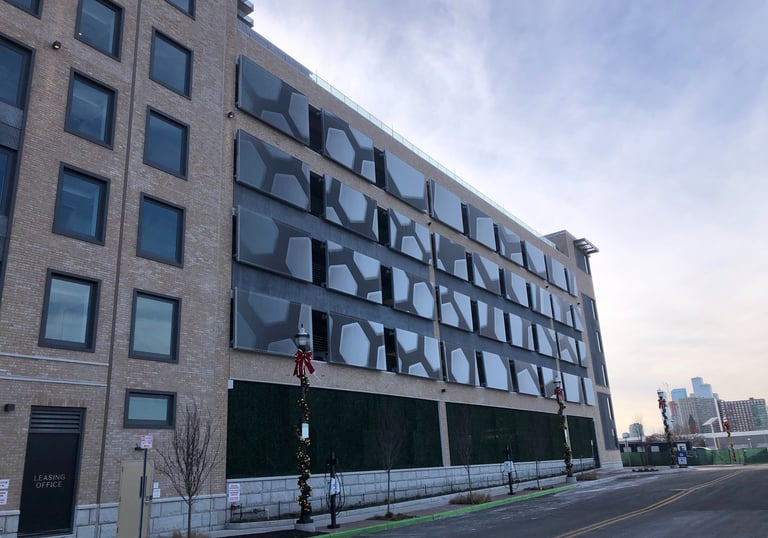
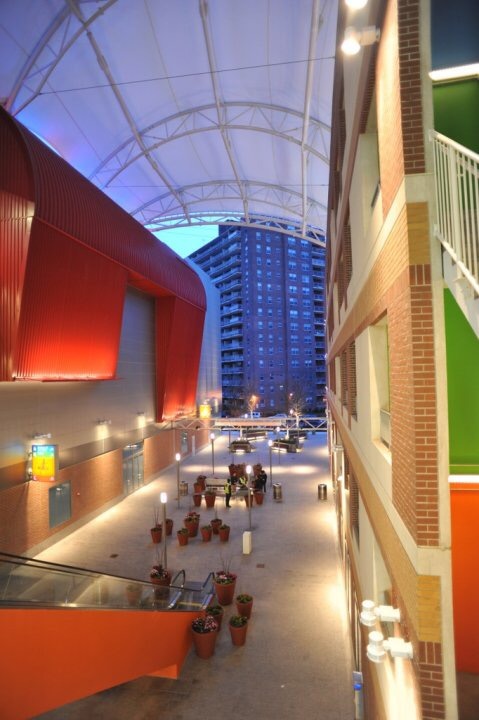
Nokia Covered Parking Structure, White Plains, NY (Perkins and Will, Fabritec Structures)

The performance of today’s architectural fabric structures depends on two main components: The membrane and the structure. The proper selection of fabric and hardware should be based on the proposed structure’s size, form, function, project economics, and desired longevity.

The best advice: Pay now, pay later or have a plan.

Membrane
The membrane forms the enclosure of the structure and can be fabricated a number of ways. It can be sewn, glued, electronically welded or heat-sealed. There are a number of seam styles, overlaps and reinforcements that differ from project to project. The final fabrication geometry for all aspects of a fabric structure should be derived from the same computer model or full scale frame.  Patterns are created using computer generated software which produces unfolded panels that represent the membrane in its stressed state. The panels are also sized according to the width of the fabric being used.  These panels are then modified or “compensated” to allow for the actual stretching of the membrane during installation.  Smaller structures, such as awnings, are patterned directly off a full scale frame.

Structural fabrics in common architectural use today include:

Teflon Coated Fiberglass (PTFE)
Vinyl Coated Polyester (PVC)
High-density Polyethylene (HDPE)

PTFE (here used in the Nokia Covered Parking structure) is used world wide as the preferred material for large-scale permanent structures or structures requiring long life and with specific construction code compliance requirements.  PTFE has excellent weather, temperature and chemical resistance in addition to its durability and strength.  This material has a life span of over 25 years and is manufactured in accordance to standards such as ASTM E-108 and E-84.  PTFE varies in translucency from 7% to 15% and reflects between 68%-75% of incident sunlight. The quality of light transmitted is color balanced, diffused and free of shadows and glare.

Before installation, PTFE has an irregular off white or slightly brown color, which is caused during the manufacturing and fabrication process.  Once exposed to direct sunlight, the external surface of the membrane bleaches to a milky white within a matter of days.  

PTFE is the obvious option if long life and low maintenance are the most important factors in selecting a fabric.  This material requires heat-sealing at the seams to join fabric pattern sections and has a life span of over 30 years.

Other non combustible fabrics include silicone coated fiberglass and hybrid PTFE. These materials are more envrionmentally friendly, more pliable and available in colors and with higher translucency than standard PTFE.

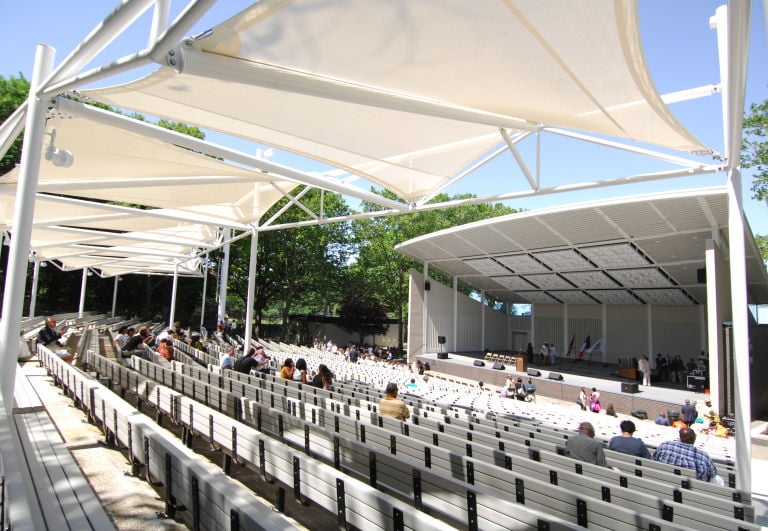
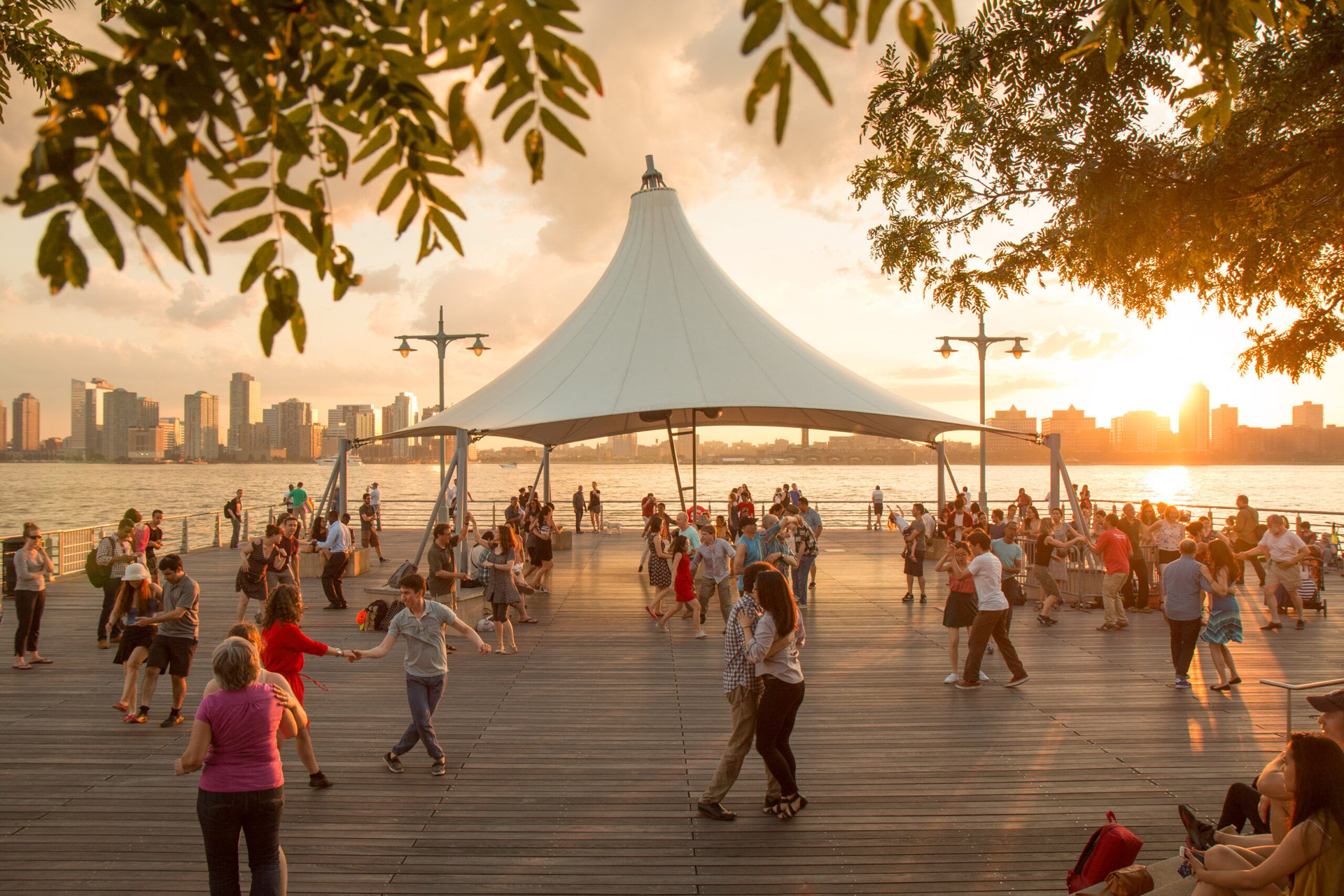
PVC (here used at the Pier Six Music Pavilion in Baltimore, MD) is the most cost effective membrane material and, therefore, an ideal choice for both temporary and permanent tension structures.  The fabric came into prominent use in the 1960’s replacing nylon, which had been used almost exclusively until that point.  The material is soft, pliable and less expensive than PTFE.  It is available in a variety of types to meet a wide range of structural requirements.  It has a minimum of stretch and shrinkage in a wide range of temperature and humidity conditions and the coating process prevents mildew, stain and streaking.  

Most PVC fabrics will have some form of top coating applied to keep them looking new and clean.  These topcoats can be acrylic solutions, polyurethane-acrylic solutions, PVDF solution coats or a PVF film lamination.  Vinyl laminated polyester is primarily used for temporary structures while vinyl coated polyester is used for both temporary and permanent structures.  

PVC material has a life span of 20-25 years.  It comes in a variety of colors and textures, but is subject to creep (stretching under load), thus requires periodic re-tensioning.  This material is sealed using radio frequency (RF) equipment.

HDPE (here used at the porte cochere at the Las Vegas Premium Outlet Mall) is a mesh material manufactured and used in a variety of ways.  This material can be made for agricultural shading or engineered and woven for structural purposes.  Shade mesh comes in a variety of styles, colors and shade factors.  A high-density polyethylene fabric provides high tensile strength, biaxial stability under load, UV stability, high UV absorption, and a Class A fire resistance in accordance with ASTM E-84.  This fabric is especially well suited for dry/hot climates where protection from sun and hail is desired. HDPE membranes are not waterproof.  This material is sewn using industrial machines.  Typically, High Density Polyethylene has a life span of 8-10 years.

Structure

The beauty of fabric structures is in the few components required to create such a structure. These elements include the primary structure and specific components related to the structure, the fittings and hardware used to tension the membrane and the membrane itself.

Mast or Compression Members
Most fabric structures require a compression member (mast or arch) to form a complex shape.  The component usually has welded “cleats” or “struts” which enable it to support the membrane, cable or other structural components.


Base Plate
The base plate forms the connection between the tension membrane structure and the ground, wall, building or adjacent structural system. The base plate is usually welded to the bottom of a compression member or separated from the mast and connected to the mast with a pin connection.


Membrane Plate
Membrane plates are the most time consuming components to design and the key to successful tension membrane structures.  Membrane plates provide a “link” from the membrane to the structural masts. These plates are installed to accept membrane catenary cables and pin connection hardware.


Bale Rings
Bale Rings are compression rings which are used at the top of conical shaped structures that are used to erect and support the membrane at the top of a mast. The membrane is normally clamped to the ring and the entire structure is tensioned at the top by “lifting” the ring. Bale rings vary in shape and size depending on the complexity of the design. They can be left opened, covered by a metal, fabric or glass top, to name a few.

Catenary Cables
“Catenaries” are formed along the fabric perimeter stretching from mast to mast. Catenary cables are installed inside a pocket in the membrane or supported along the edge with cable straps and usually terminated with a threaded end stub or forked clevis that is connected to the membrane plates.  


Tie downs
Each perimeter mast requires either a large moment connection or a series of cable tie downs to withstand the loads. Tie down cables are generally attached to cleats on the top of a mast and connected to anchors installed in the ground with turnbuckles. Specialized HardwareFabric Structure hardware consists mostly of parts made for yacht racing, bridge building, rigging and mountain climbing industries.  Shackles, turnbuckles, “toggles” and carabineers are just a few of the hardware choices available.  These components are the link between the membrane and the primary structural support.